
Mosasaurus
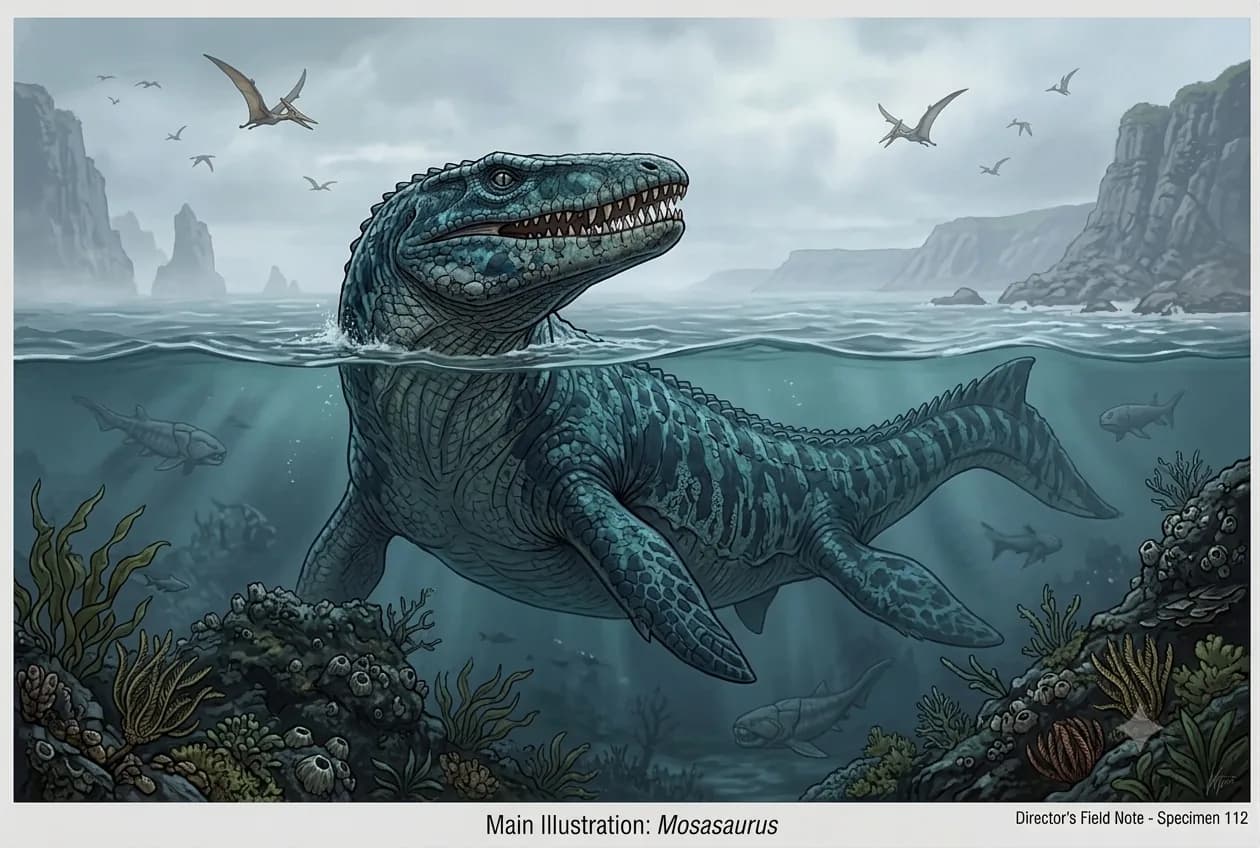
Not a dinosaur, but a colossal marine squamate closely related to modern monitor lizards and snakes. The jaw biomechanics are terrifyingly efficient: in addition to massive outer tooth rows delivering over 15,000 Newtons of crushing force, Mosasaurus possesses a second set of pterygoid teeth in the upper palate to drag struggling prey down its throat. Pelagic containment requires triple-layer 14-inch acrylic bulkheads; submersibles must keep acoustic transponders active during maintenance cycles to avoid territorial acoustic ping responses.
PALEONTOLOGICAL FACTSFIELD_DATA
- What kind of prehistoric animal was it?Colossal aquatic reptile (marine squamate) and apex oceanic predator, closely related to modern monitor lizards and snakes.
- When did it live?Late Cretaceous period (late Maastrichtian stage, ~66–70 Million Years Ago).
- Where was it found?Global oceanic distribution; first described from chalk quarries along the Meuse River in Maastricht, Netherlands.
- How big was it?Roughly 40–46 feet long (12–14 meters) and weighing between 10–15 metric tons.
BIOMECHANICS & ADAPTATIONS
Hydrodynamic serpentine body propelled by a crescent-shaped tail fluke, paddle-like hydrofoil flippers, flexible intramandibular jaw joints, and sharp pterygoid throat teeth that prevent prey from escaping.