
Therizinosaurus
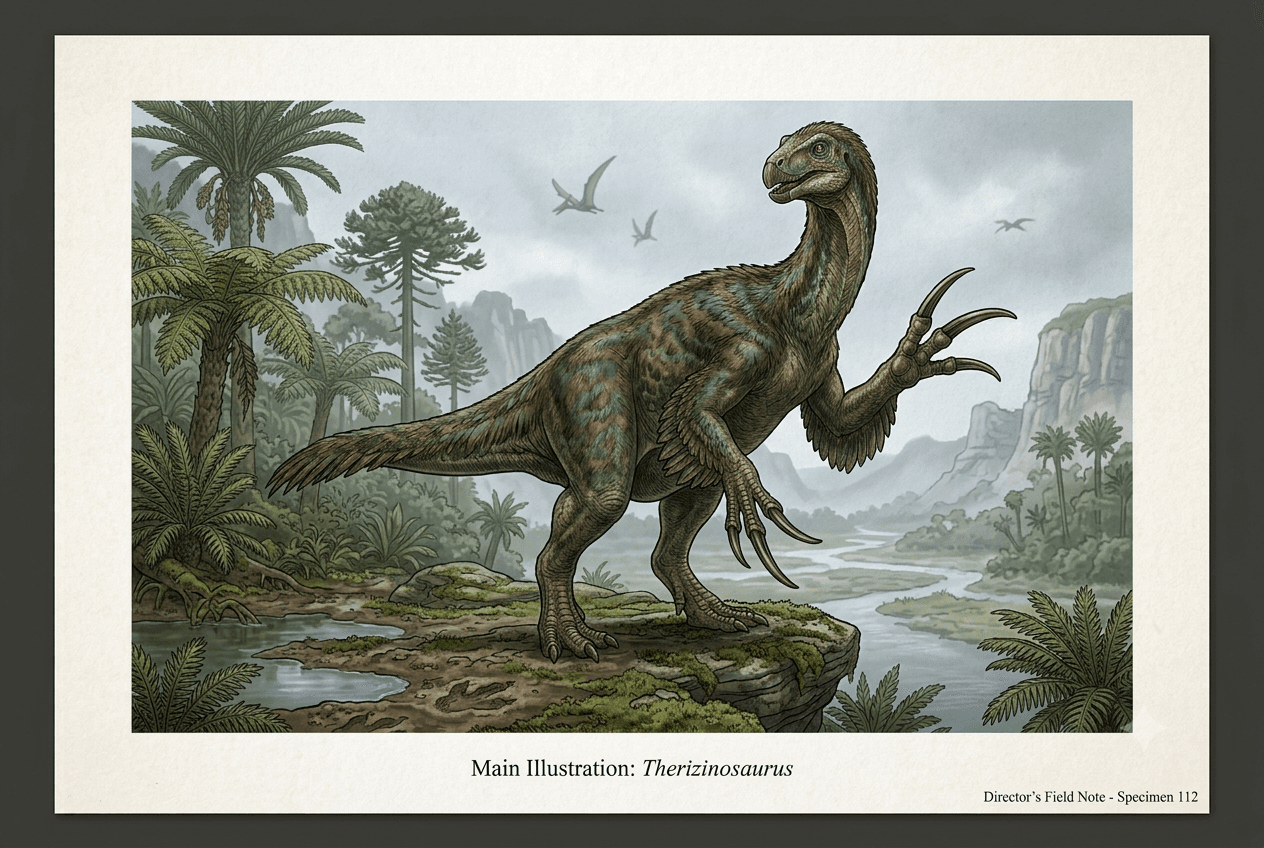
Do not misjudge this theropod because of its herbivorous diet. Standing nearly 18 feet tall on broad four-toed feet with an expansive pelvis housing a massive fermentation gut, its forelimbs carry three-foot curved unguals—the longest claws in Earth's history. These function primarily as folivore hooks to pull down tough desert foliage, but their reach envelope makes them devastating defensive weapons against apex predators like Tarbosaurus. Keep all overhanging trees cut back at least 20 feet from perimeter fencing to prevent branch-hooking leverage.
PALEONTOLOGICAL FACTSFIELD_DATA
- What kind of dinosaur was it?Gigantic, bipedal, pot-bellied herbivorous theropod belonging to the bizarre maniraptoran family.
- When did it live?Late Cretaceous (Maastrichtian stage, ~70 Million Years Ago).
- Where was it found?Nemegt Formation in the southern Gobi Desert of Omnogovi Province, Mongolia.
- How big was it?Roughly 30–33 feet long (10 meters), standing up to 18 feet tall, and weighing around 5 metric tons.
BIOMECHANICS & ADAPTATIONS
Possessed the longest recorded claws of any land animal in Earth's history (exceeding 3 feet / 1 meter along the curve), supported by strong forearms capable of pulling down whole tree canopies or disemboweling predatory carnosaurs.