
Dimorphodon
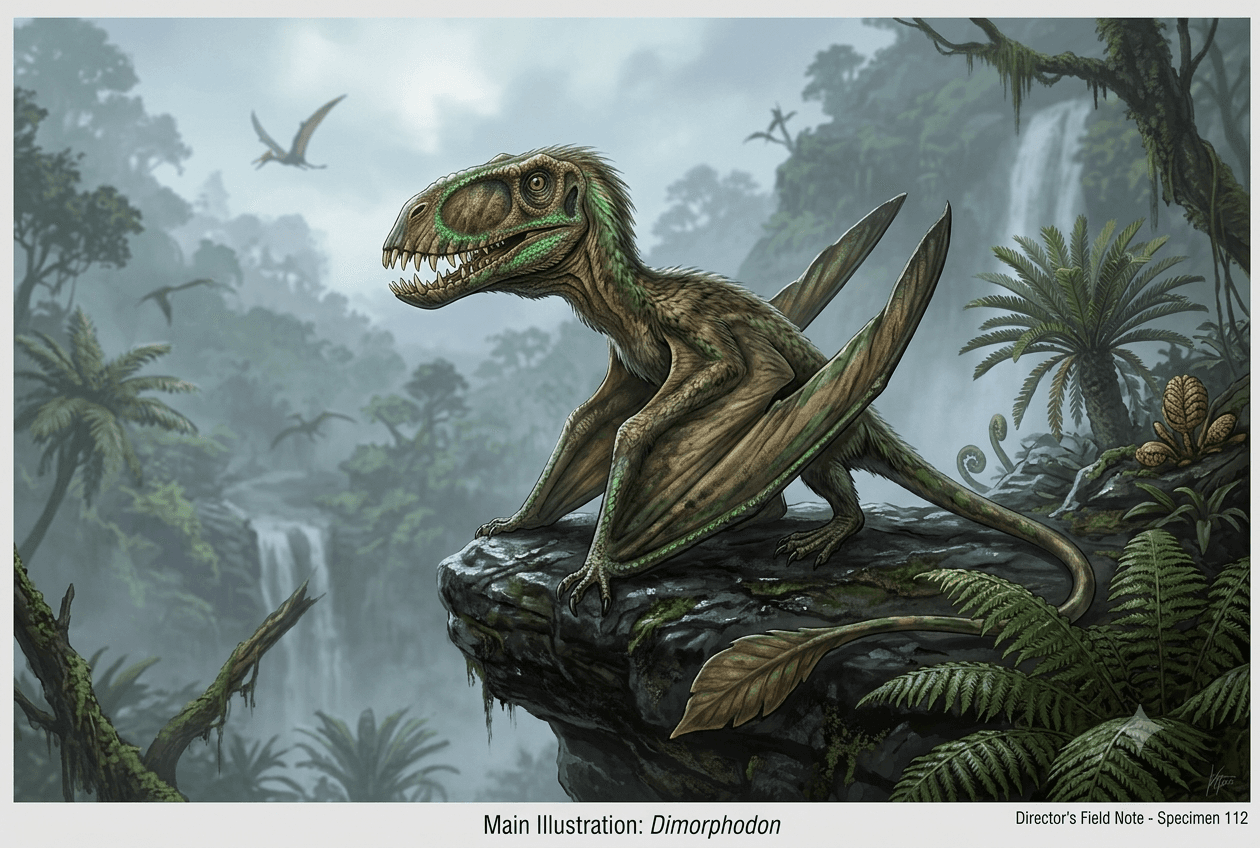
Not a dinosaur, but an early basal pterosaur with unique flight dynamics. Unlike later long-distance soaring pterosaurs, Dimorphodon possessed broad, rounded wings with a 4.6-foot span suited for short-burst, flutter-gliding between cliff roosts. Its deep, puffin-like skull features pronounced weight-reducing fenestrae and heterodont dentition—large predatory fangs forward, tiny lancet teeth aft. Double-airlock protocols are mandatory at aviary gantries; their curved manual claws allow them to scramble rapidly up steel tension cables before dropping into dive trajectories.
PALEONTOLOGICAL FACTSFIELD_DATA
- What kind of prehistoric animal was it?An early non-dinosaur flying reptile (basal pterosaur) with a remarkably deep skull and two distinct types of teeth.
- When did it live?Early Jurassic period (Hettangian to Sinemurian stages, ~190–195 Million Years Ago).
- Where was it found?Discovered along the cliffs of the Blue Lias Formation near Lyme Regis on the Jurassic Coast of Dorset, England.
- How big was it?Wingspan of roughly 4.6 feet (1.4 meters), skull length of 8.5 inches, weighing only about 2–4 lbs.
BIOMECHANICS & ADAPTATIONS
Armed with a remarkably deep, lightweight skull packed with two specialized tooth sets (heterodonty), strong gripping claws on both hands and feet for vertical rock climbing, and a diamond-tipped stabilizing tail rod.